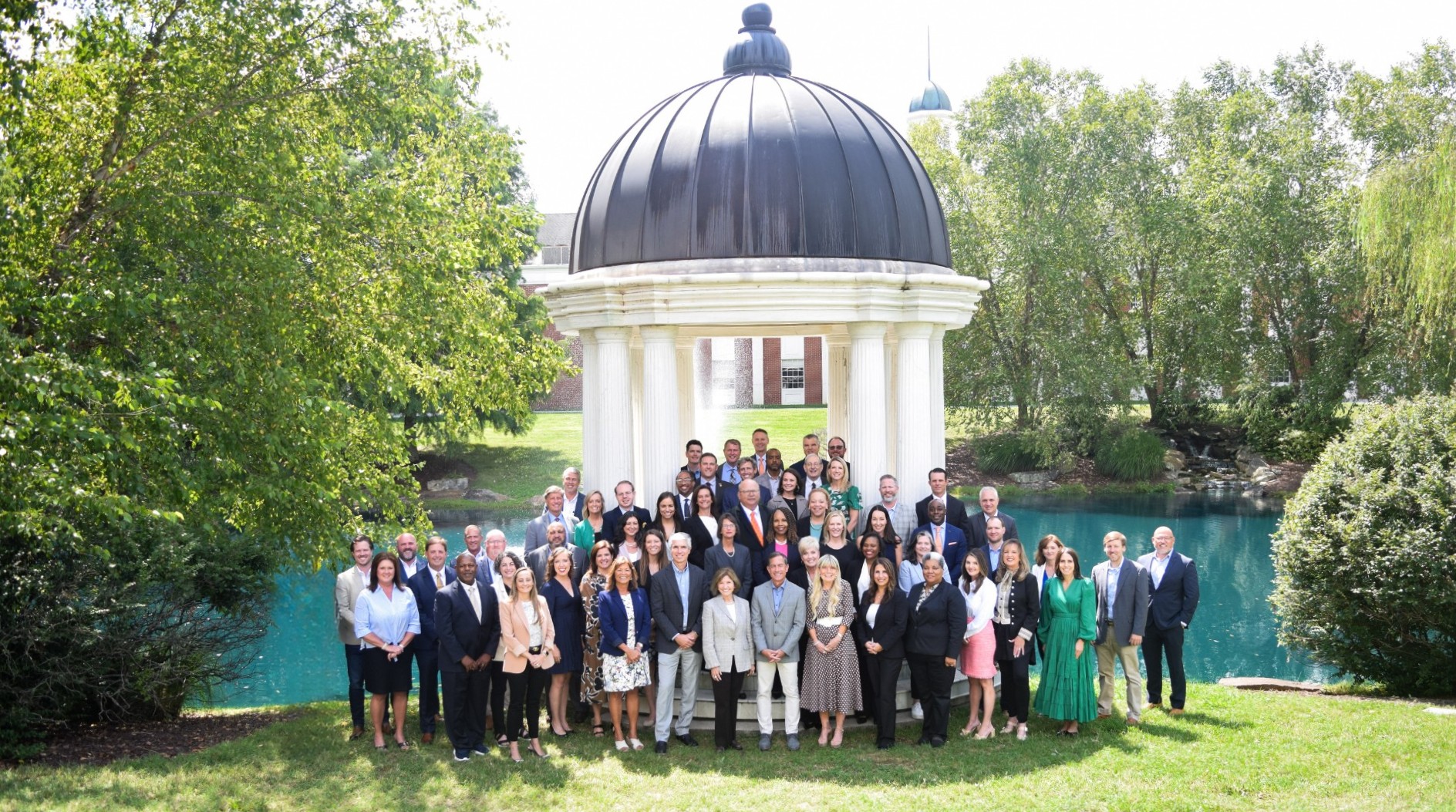
For David Anderson, leadership extends far beyond the walls of the University of Tennessee College of Veterinary Medicine. As associate dean for research and graduate studies, Anderson has spent decades building programs, mentoring students, advancing biomedical research, and strengthening collaborations across veterinary medicine and the health sciences.
Now, through his participation in the Class of 2026 of Leadership Knoxville Flagship Program, Anderson is exploring leadership from a new perspective that is rooted in community connection, regional growth, and service to East Tennessee.
The Leadership Knoxville Flagship Program brings together leaders from across industries to learn more about the opportunities and challenges shaping Knoxville and the surrounding region. Through conversations, site visits, and collaborative discussions, participants gain a deeper understanding of how organizations and individuals work together to strengthen the community.
For Anderson, the experience has highlighted the University of Tennessee’s role as an important partner in the region’s future.
“Leadership Knoxville is a magnificent program that broadens our view on how the city, county, business sector, and community work and how the University of Tennessee is an integral partner in what we do for East Tennessee,” Anderson said. “Learning from history, current challenges, and opportunities for the future is insightful and inspirational.”
As a board-certified large animal surgeon, Anderson has built a career centered on innovation, mentorship, and collaboration. He joined the University of Tennessee in 2012 and has served in several leadership roles, including professor and head of the Department of Large Animal Clinical Sciences before becoming associate dean for research and graduate programs in 2020.
His work has earned numerous honors throughout his career, including designation as an American Association for the Advancement of Science (AAAS) Fellow, recipient of the American Veterinary Medical Association Lifetime Excellence in Research Award, and appointment as a Chancellor’s Professor at the University of Tennessee.
Despite his extensive experience in leadership positions, Anderson said Leadership Knoxville has challenged him to think more broadly about the connections between education, research, public service, and community impact.
“We, as citizens, public employees, and leaders in health for animals and people, need to have a 360-degree view of how we serve and support the community,” he said. “There are many opportunities where we can engage in public-private partnerships to have a great impact on people, create great places, and do great things.”
Throughout the program, Anderson has been inspired by the people and organizations working behind the scenes to improve Knoxville and East Tennessee.
“What energizes me the most about Knoxville is being around people who have creative minds and can-do attitudes,” he said. “I was amazed by the number of organizations and people doing great things to benefit this community and the people living in and intersecting with the city and county.”
The experience has also deepened his appreciation for the region’s potential. Anderson sees Knoxville as a community positioned to become a national leader in areas such as technology, innovation, energy, and health care while continuing to address the needs of the people who call East Tennessee home.
“There are so many great things happening that offer Knoxville the opportunity to be a national leader in technology, energy, innovation, and health care,” Anderson said. “There are equally as many urgent needs to support the people and communities so that all have the opportunity to prosper.”
For Anderson, Leadership Knoxville has become more than a professional development experience. It has been an opportunity to listen, learn, and reflect on how leadership can help create stronger communities and a brighter future for East Tennessee.
“Only by having a clear view of what surrounds us can we truly achieve what Knoxville and East Tennessee are capable of doing,” he said. “We will be judged for the culture and community seen through the eyes of our citizens.”